The new luxury doesn’t announce itself. It’s felt. And hotels that still confuse narration with advertising are losing the only war that matters: the war of desire.
There is a structural confusion in how the hospitality industry understands digital marketing: it believes it’s about visibility. More impressions, more reach, more content. But visibility without mystery is just noise. And noise, by definition, doesn’t seduce.
Luxury — real luxury, the kind that generates sustainable desire — never worked through accumulation. It worked through what isn’t shown. Through the calculated distance between the promise and the revelation. The great hotels that maintain untouchable rates don’t have better campaigns: they have better silences.
An ADR is not a financial figure. It’s a real-time reading of how much the market trusts your narrative.
The mistake of radical transparency
The luxury brands that have lost relevance in 2026 — Gucci, parts of the LVMH universe, several that three years ago seemed untouchable — share a common denominator: they became too visible. Too accessible. Mass distribution, the permanent drop, negotiating identity in public. They destroyed the necessary condition for desire to exist: the resistance between the object and the one who wants it.
Hotels are making the same mistake, but in digital. Every behind-the-scenes story, every room video tour, every breakfast flat lay is a micro-dose of familiarity that erodes the aura. Showing without narrative criteria turns luxury into a catalogue. And a catalogue, however beautiful, doesn’t generate desire — it generates comparison.
Narrative as the architecture of price
A hotel with a well-built brand can charge up to 30% more in ADR than its generic competitor in the same segment. The bed is the same. What changes is the interpretive frame the brand builds around every element of the stay — and that frame is what justifies the rate. The feeling of being in exactly the place you needed is what gets paid for. And it’s the only thing OTAs cannot replicate.
The digital narrative that converts is not the one that tells everything. It’s the one that builds a question in the mind of whoever receives it: what will it feel like to be there? That unresolved question is the engine of the booking. Answering it too soon is the most expensive mistake a hotel can make.
It’s not about telling who you are. It’s about making them remember how you made them feel before they even arrived.
What turns content into conversion
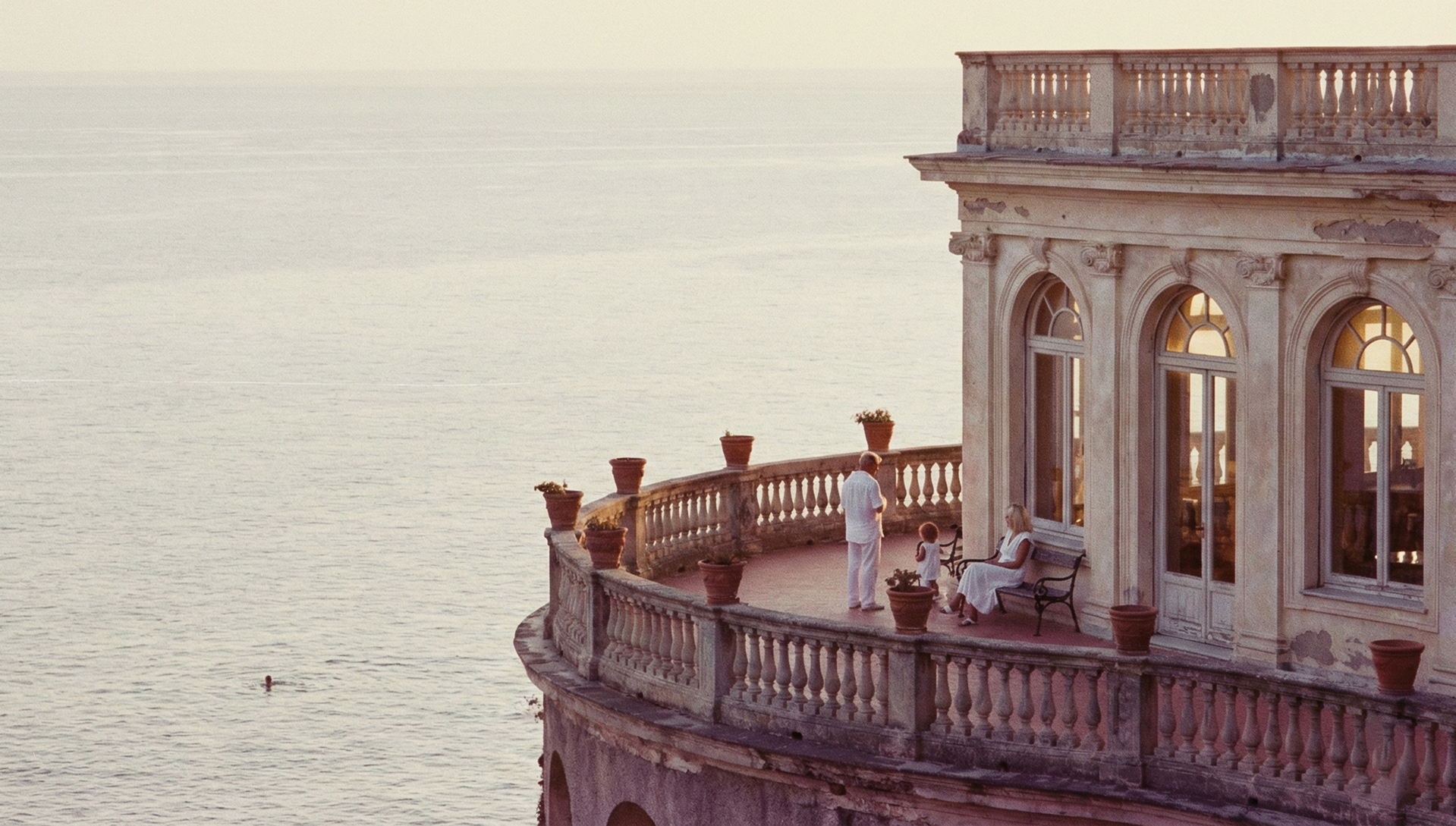
Content that hooks doesn’t describe facilities — it projects the reader into an experience they haven’t had yet. The difference between “our terrace has sea views” and “there’s a moment, just as the sun meets the water, when you understand why you came” is not poetic. It’s strategic.
Then there’s silence. Not everything gets published. Not everything gets answered. Hotels with the greatest pricing power manage expectation with the same cool precision with which they manage revenue. Hermès doesn’t explain its creative decisions. Brunello Cucinelli doesn’t reposition itself in public. That too is communication.
And then, the hardest thing to accept: frequency doesn’t build reputation. Consistency does. A feed that is aspirational today, promotional tomorrow, and institutional the day after doesn’t accumulate — it scatters. A one-point increase in online reputation allows you to raise rates by 11% without losing occupancy. That reputation is built with narrative consistency, not with volume of posts.
The outcome
Hotels that understand this don’t talk about marketing. They talk about identity. And when identity and revenue sit at the same table — looking at the same numbers from different angles — something rare in the industry happens: decisions stop being tactical and start building the future.
The new luxury doesn’t announce itself. It’s earned. And hotels that learn to narrate themselves from that conviction discover that the best direct booking channel isn’t technology. It’s the story they make inevitable to want to live.